In presenting our film to our peers, the class gave us some useful feedback for either changes to make or improvements/losses from our previous showing. Unfortunately, during the initial round of presentations a few months ago, we were unable to present our film during a time where I was present as we ran out of time to present during my class period, however one of my fellow project members, who is in a different class period, was able to show the film to that class. Because of this, the ability to show the film this time around and receive feedback directly to myself was incredibly critical.
One point that a classmate mentioned was a continuity error towards the end of the film. At 1:46, the agent puts their hand out to the protagonist. At this point, from the angle of the shot, their should be a white brick wall in the background, however their is a car in the background instead. This wasn't something I had initially noticed, so I was very grateful to have an outside party be able to notice such an issue. Our best option to fix this problem is to go to an area on our school campus with a similar background and reshoot the shot. Luckily it is a fairly simple shot and doesn't require as much preparation as, say, a midshot would.
Another classmate asked if we had used sound effects when the robber punched the protagonist or was pushed. Sierra covered the editing of the film so I had no hand in if there was one or not, however I know there wasn't one and said such. This comment did, however, bring up the idea of doing as such which would help to drive home the point that the protagonist is stronger than the average human.
A comment that wasn't mentioned in my class period but was in another class period was our films change in lighting. In our previous draft, the film was shot at night. We weren't satisfied with the nighttime lighting, so we reshot during the day when it was bright out. Some peers mentioned that they preferred the dark lighting over the bright lighting since a robbery was more likely to happen at night. We don't plan to change back to dark lighting, however the comment still helped us to weigh the pros and cons of our reshooting.
Friday, March 23, 2018

Thursday, March 15, 2018
Integration of Technology
We used multiple forms of technology throughout out film's development. The obvious examples would be our camera and editing software. For our camera, we borrowed one from a friend who is interested in film making so had a fairly nice quality filming camera. He was also generous enough to lend us a boom mic, allowing us to having a higher sound quality. The use of these nicer pieces of technology for our film's development put it on that more professional grade that we all wanted. The boom mic was an incredibly new piece of technology that none of us had used before. I was the main operator of the mic throughout filming, so was able to become most comfortable with the device, although it was still a struggle to use and get used to. I was still, however, very grateful to be supplied with the technology. As for our editing software, my team member Sierra White handled all of the editing since she has some previous experience with editing since she likes to animate. The software used was Adobe Premiere Pro CC 2015. This was made available to us through our school, who supplied it on our in-class computers. The supplying of this program was incredibly useful to us, however it was limited by its availability being restricted to the class computers, meaning we couldn't do any of our films editing outside of school.
Monday, March 12, 2018
Development of Production Skills
Throughout this project, our teams production skills greatly improved. Since most of us went into this project with almost no production skills, every step of the production process was a learning experience.
I've learned much about the film industry, specifically within the superhero genre. I've had to do lots of research into the marketing of films that I previously didn't know. I looked into the differences between digital distribution and physical distribution. I hadn't considered how much the evolution of digital distribution has changed the film industry. Film has been around for much longer than the internet, however we often don't consider how our use of it manipulates other industries and how they appeal to us. I now have a better understanding of how to distribute a service such as a film and have an improved skill in this factor of the industry.
I also have developed a stronger skill with my understanding of how the audience views a story. Within the writing of our script for our film, I thought I had a strong understanding of what scenes and what shots can portray certain emotions and tones to the audience. I do believe that I did have a solid understanding of this, however I certainly have a stronger one now than before. I now know what certain film techniques are called and what they can convey.
I've learned much about the film industry, specifically within the superhero genre. I've had to do lots of research into the marketing of films that I previously didn't know. I looked into the differences between digital distribution and physical distribution. I hadn't considered how much the evolution of digital distribution has changed the film industry. Film has been around for much longer than the internet, however we often don't consider how our use of it manipulates other industries and how they appeal to us. I now have a better understanding of how to distribute a service such as a film and have an improved skill in this factor of the industry.
I also have developed a stronger skill with my understanding of how the audience views a story. Within the writing of our script for our film, I thought I had a strong understanding of what scenes and what shots can portray certain emotions and tones to the audience. I do believe that I did have a solid understanding of this, however I certainly have a stronger one now than before. I now know what certain film techniques are called and what they can convey.
Friday, March 9, 2018
How Film Engages with Audience/How it Would Be Distributed
Our films engages with audiences through the use of social media. A common tactic used by films, especially ones within our genre, is the use of social media accounts to connect with audiences. Since a major part of the target audience of this genre are active on social media, this tactic allows for direct interaction with many possible fans of our film. This strategy has been used by films such as Thor: Ragnarok, who created the Twitter trend #WhatsRagnorok where fans could respond with what the work 'Ragnarok' meant to them. This could be taken comedically or seriously, appealling to various audiences and helping to spread the word of the films release.
Our films distribution would likely consist of taking advantage of primarily digital platforms, such as iTunes. Use of such platforms benefits filmmakers such as ourselves who have minimal budgets. The film would be easily accessible to audiences, although it chances being lost among other products distributed on the same platform.
Our films distribution would likely consist of taking advantage of primarily digital platforms, such as iTunes. Use of such platforms benefits filmmakers such as ourselves who have minimal budgets. The film would be easily accessible to audiences, although it chances being lost among other products distributed on the same platform.
Thursday, March 8, 2018
How Product Challenges Conventions (Updated)
1.
Our product represents social groups through its
use of a female lead. Specifically within the superhero genre, females are
strongly underrepresented. This plays into the old fashioned idea of being
uncomfortable with the idea of women in powerful positions.
In the modern age of the superhero genre
transferring from books to films, the majority of superhero films star a male
lead. This discrimination can be measured using the Bechdel test. To pass the
Bechdel test, a film must have at least two named female characters, they must
talk to each other, and they must talk about something besides a man. Many
modern superhero films don’t pass this test, such as ‘Ant-Man’, ‘Doctor Strange’,
‘Green Lantern’, and ‘Captain America: The First Avenger’. Some people claim
that this makes sense since the genre typically targets young male audiences,
however this excuse doesn’t hold when considering that statistics show women
indeed to cover a large amount of the genre’s audience. The ratio of men and
women that saw ‘Marvel’s The Avengers’ was 60% men and 40% women, while 44% of the
audience of ‘Guardians of the Galaxy’ was female. This convention of ignoring
females within superhero films has gone largely unchallenged besides movies
such as ‘Wonder Woman’. At current date, the popular superhero film franchise
of the Marvel Cinematic Universe has not produced a single film with a leading
female superhero. Our film attempts to challenge this convention by introducing
a female protagonist, furthering this challenge by giving her super strength,
which challenges the basis of the discrimination of women in superhero films
being that people are uncomfortable seeing powerful women.
Our film also challenges conventions by presenting a female protagonist comedically. There is a long-standing underlining idea in the film industry that women aren't as funny as men. In 2013, the top 10 highest-paid comedians, who combined made $173 million, were all men. Many people try to justify such statistics with points such as those made by Christopher Hitchens in his article for Vanity Fair in January 2007 where he tried to explain that much of humor comes from mocking people physically or referencing the physical decay of a person. He says that for men, this is humorous since it is less important for them, however for women since they can give birth the mocking of the body is more serious therefore not funny. His article says, "In other words, for women the question of funniness is essentially a secondary one. They are innately aware of a higher calling that is no laughing matter." Such ludicrous and unjustifiable arguments as the one made by Hitchens have been attempting to justify the sexism in the comedy industry for a long time. Our film challenges this convention by including a female protagonist who is humorous rather than the serious attitude portrayed in previous female superheroes such as Wonder Woman and Black Widow.
Tuesday, February 27, 2018
Research- Digital Distribution for Ant-Man
Ant-Man was released initially in theaters in North America on July 17th, 2015. The films home media release began digitally on Digital HD and the Disney Movies Anywhere app on November 17th, exactly four months after the initial release. This was followed by its Blu-ray and DVD launch on December 8th.
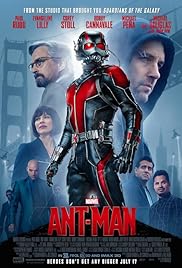 Releasing a movie digitally prior to its physical release is the typical route for home distribution of films, however this films release differs slightly in the release of it on the Disney Movies Anywhere app. Since Marvel, the company which creates the Marvel Cinematic Universe films, is owned by Disney, the company can distribute the film through one of its other services. This isn't a tactic that my group would be able to observe since we are, obviously, not a subsidiary of a larger company. This could still be possibly utilized in a different form, such as forming a partnership with a specific digital distribution platform. To give a single, likely more popular, digital distribution service exclusive rights to distributing our film may slightly limit our audience, but could also increase profits due to the deal between the companies.
Subscribe to:
Posts (Atom)